Warranty conditions for natural stone countertops
In general, natural stone products are suitable for use both indoors and outdoors, although the suitability of the location should be determined based on the specific properties of the specific stone.
In the case of natural stones, exact correspondence of color and pattern to the stone sample cannot be guaranteed. Natural stone countertops are unique and unrepeatable.
The Hansakivi factory treats the manufactured surfaces with a special stone protection agent, which significantly reduces the risk of stains caused by food and drinks, although if acidic substances and oils get on the work surface, they should be cleaned from the surface with a soft, damp cloth as soon as possible, no later than within 12 hours.
The stone protection agent is hygienically clean.
Hansakivi provides a 1-year warranty for its natural stone products from the date of installation, based on the purchase document.
The warranty applies to material and manufacturing defects and covers the cost of the material, as well as manufacturing costs if the defect is due to the manufacturer’s fault.
Warranty repairs do not extend the product’s warranty period.
The warranty does not apply to:
- in the event of defects caused by incorrect use or maintenance of the product.
- in the event of defects that do not impair the value or use of the product.
- if the product has been independently reprocessed.
- Damage caused by mechanical impact during use of the product.
- Damage caused by temperature during use of the product. For example, placing a hot pot or pan directly on a flat surface can cause discoloration, cracking or splintering of the surface.
- Damage caused by chemical impact during use of the product. E.g. corrosive substances damage the surface (acids, bases and various chemically active substances).
- if the surface is damaged by black tea (pigments)
- if the surface is damaged by oils (fats).
USE AND CARE OF NATURAL STONE KITCHEN COUNTERS MAINTENANCE INSTRUCTIONS
The surfaces produced at the Hansakivi factory are treated with a stone protection agent before being delivered to the customer. We recommend treating stone surfaces with a protection agent at intervals of approx. 1-2 years, depending on the type of stone and the intensity of use (as a general rule, light stones are treated approximately once a year and dark stones every two years).
Regular maintenance and high-quality cleaning agents will ensure that your work surfaces will look beautiful for many years.
CLEANING IN GENERAL:
Neutral (pH 7), slightly acidic (pH 4 – 6) or slightly alkaline cleaning agents (pH 8 – 10) are suitable for cleaning granite and quartz
Be sure to check the information on the detergent label before using it.
Acidic cleaning agents should not be used to clean marble.
Granite and marble surfaces should not be cleaned with abrasive substances and tools. If you are unsure, feel free to ask for advice on using special stone care and protection products.
IMPORTANT It is important to clean stains as soon as possible so that the stain does not have time to absorb into the stone. In the case of granite, this can be done within 20 minutes, but marble absorbs substances faster due to its porosity. This means that later cleaning may no longer be effective and the stain will remain in the stone.
DO THIS: If juice, coffee, oil, grease or red wine gets on the stone, dry it immediately with a paper towel and wash it with a neutral detergent diluted with water
(many dishwashing detergents are suitable for this). Wipe the stone dry with a soft cloth.
Let’s once again highlight substances that should be handled with care: grease and oil, red wine, coffee and tea, and acidic juices.
We recommend and sell professional products for the maintenance of stone surfaces.
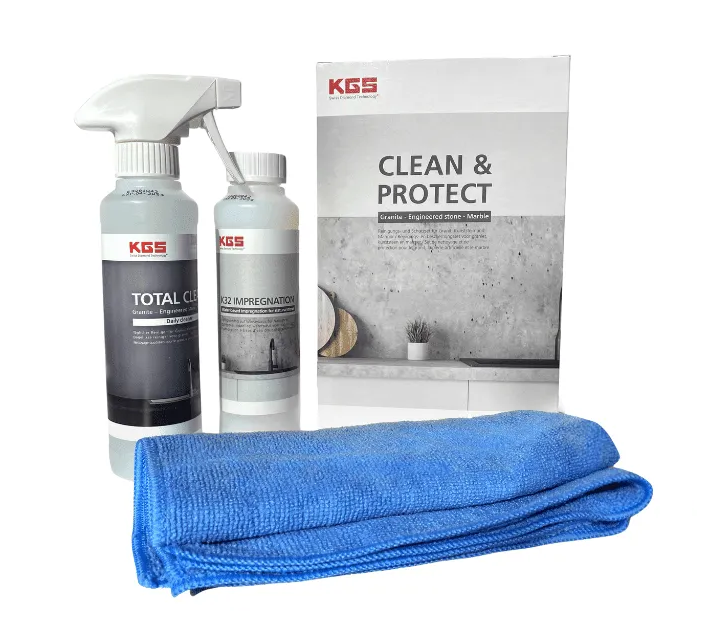
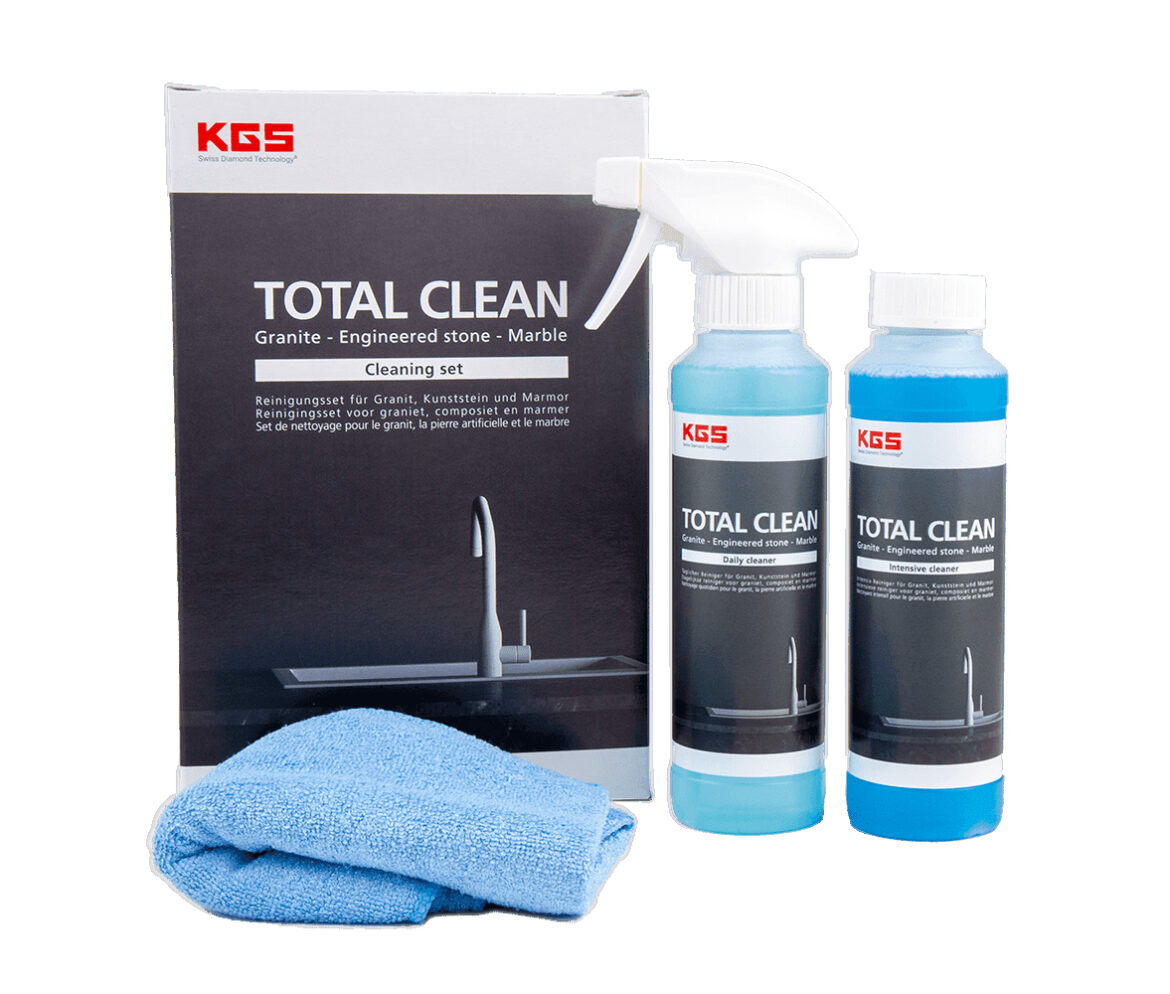
TO MAKE THE STONE LAST A LONG TIME, DO THIS:
- Clean stains on the stone immediately so that unwanted substances do not absorb into the stone. Do not let stains dry, as subsequent treatment may not give the desired result. If the stone does not come clean, please contact Hansakivi.
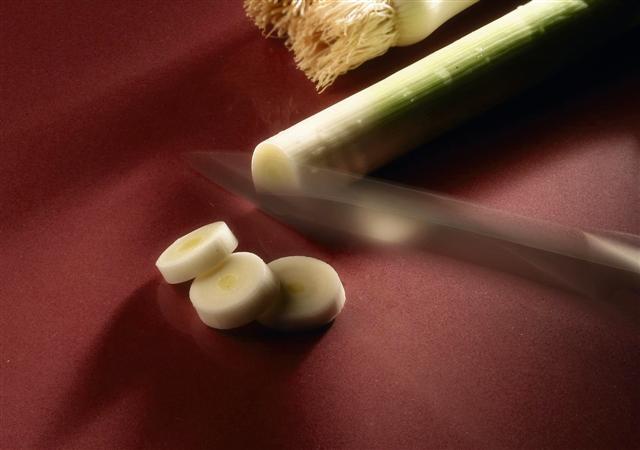
- Avoid scratching the stone – use a cutting board. Modern knives can be made of special strong steel, which leave scratches on polished or honed surfaces. With ordinary steel knives, the risk of scratching is low. Do not use a stone as a base for hammering – cracks and chips may form in the stone.