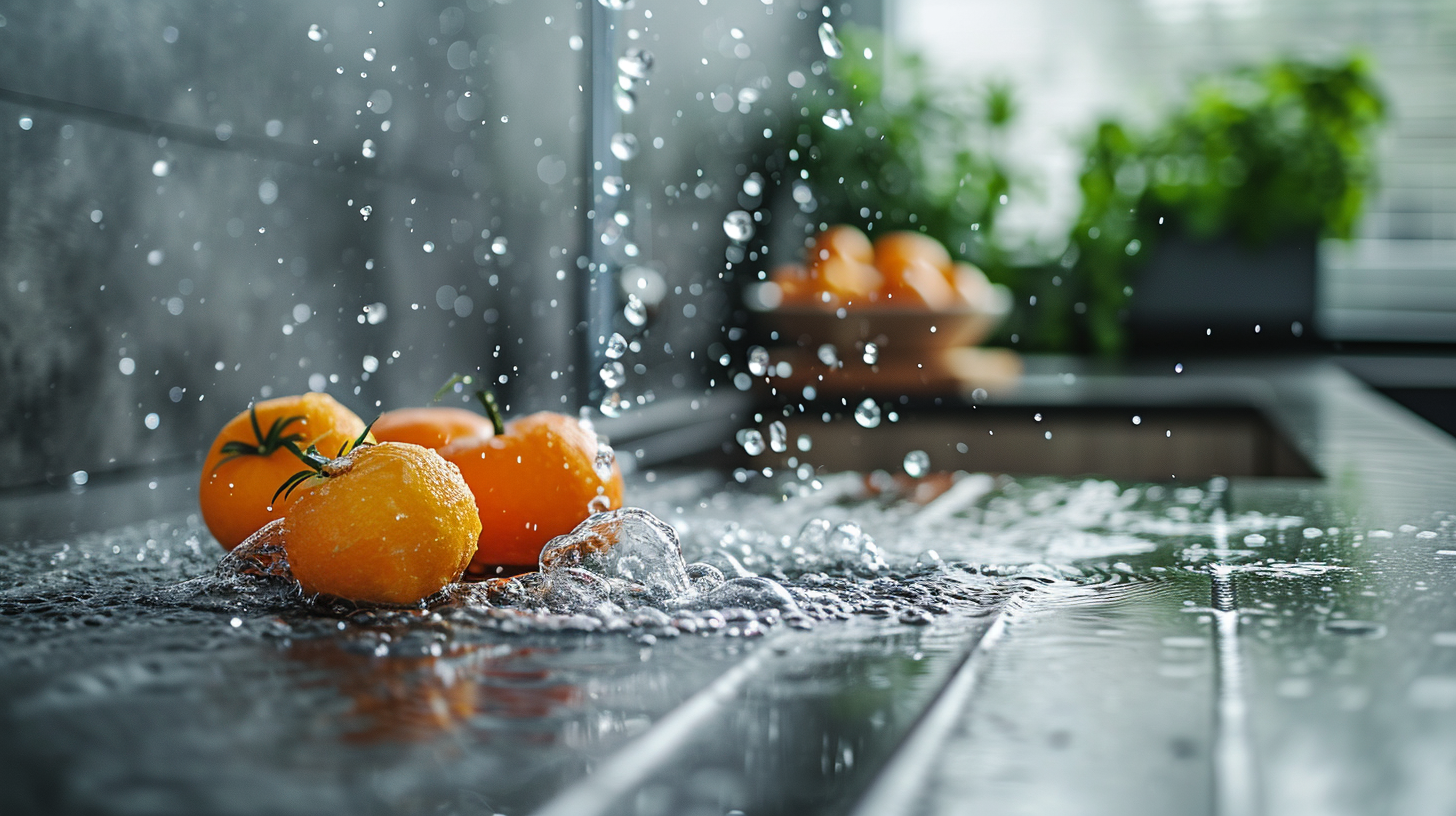
Quartz is a high-silicon component (quartz, sand, granite), polyester resin and UV-stable color pigments pressed together under vacuum and high heat.
Quartz combines good mechanical properties and an aesthetically beautiful appearance, which makes the stone a good material for both kitchen countertops and technically very demanding architectural projects.
PRODUCT TECHNICAL PROPERTIES
As a versatile stone, quartz is very good for use within various projects. Raw slabs with a polished, matte or roughened surface produced in standard production are 306 x 140 cm in size, 1.2; 2 and 3 cm thick.
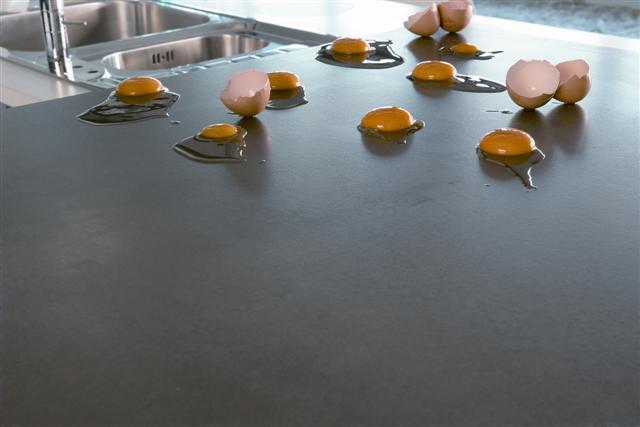
There are approximately 100 different colors to choose from. Quartz is ideal for floors, facade cladding, kitchens, bathrooms and, thanks to its strong composition, for high-traffic areas. Since the mixture from which quartz is made consists of 95% natural components, the physical and mechanical properties of the finished product are also similar to natural stone:
- natural appearance
- breakage and scratch-resistant
- bending-resistant
- uniform color, which makes pressed granite well suited for covering large surfaces
- aesthetic appearance
- durable color
- weather and frost-resistant
- when ordering more stone in the long term, you can be sure that the new order will be identical in color to the previous one(s)
- a large selection of colors allows quartz to be used in projects of very different natures
The extremely hard, non-porous and scratch-resistant surface makes it a very suitable stone for public spaces and pedestrian areas. In addition, the physical, mechanical and chemical properties are unchanged over time. The quartz product family includes both cut-to-size tiles and raw tiles (so-called slabs), from which details can be cut out according to special order, such as worktops, stair treads, etc.
QUARTZ WORKTOPS AND FURNITURE DETAILS
It is possible to cut out square and special-shaped surfaces, simple and more complex, from raw tiles on a CNC bench, such as window sills, table tops, worktops for kitchens or sink tops for bathrooms. The stone is also suitable for back or partition walls of toilets or showers. All of these details can be matched with wood, metal and other furniture materials. The stone’s wide range of colors contributes to the unique furnishing of a kitchen or bathroom.
INSTALLATION OF WORKTOPS
The same mixtures and installation tools are suitable for installing stone as for regular natural stone. When installing a stone worktop on a wooden or metal frame, we recommend using polyurethane binders or silicone.
QUARTZ PROCESSING
Raw slabs can be cut and processed in a similar way to granite or other natural stone, using diamond blades and suitable grinders. This applies to both straight cuts and more complex-shaped parts.
STONE CARE
Since quartz is very dense in consistency and has an extremely low absorption level, it is easy to clean: it does not absorb liquids or grease. The surface of the stone is resistant to most household damage: stains and scratches. To increase water and dirt resistance, the surface can be treated with water and oil repellents, although practice has shown that there is actually no direct need for this. Quartz is very easy to maintain, just wipe with a clean damp cloth. For more stubborn stains, you can use a neutral pH cleaner, which should be rinsed thoroughly with clean water after washing the surface. Heavily soiled surfaces can be cleaned with special stone cleaners. Cleaning with hot steam is not particularly recommended, at least not as a daily maintenance. Although quartz is generally resistant to household chemicals, there are still some substances that can damage the surface. These substances include sulfuric acid, ethyl acid, ketone (acetone) and strong solvents (including paint strippers). The degree of surface damage depends on the extent to which the stone has been exposed to chemicals. If the previous list was of substances that can damage the surface, the following substances will definitely do so: hydrofluoric acid, soapstone or chlorine-containing solvents (such as chloroform).